E. coli response for councils and water organisations
How to protect people’s health and prevent recurrent E. coli contamination in drinking water supplies managed by councils, council-controlled organisations or water service providers.
This page is designed for council suppliers and council-controlled organisations, and any organisations created as part of service delivery models developed under Local Water Done Well.
Information outlined here can help large government, commercial and community supplies respond to an E. coli detection, but make sure you understand specific responsibilities for your supply.
To understand your water supply and legal responsibilities, use the ‘What type of water supply do you provide?’ assessment tool.
Water service providers must respond when laboratory testing of treated drinking water indicates the presence of E. coli.
Take E. coli seriously
Escherichia coli (E. coli) is a bacteria often found in the gut of animals. A positive E. coli test means there is faeces from animals, birds or people in the water. When E. coli shows up in drinking water, it means a range of other harmful pathogens carried in faeces could be present too.
Anyone who drinks the water could get very sick. Children, the elderly and people with health conditions are usually at higher risk.
If E. coli is detected in treated drinking water you supply, you need to act quickly to protect people’s health, find the cause of the contamination and fix any problems.
The Water Services Authority – Taumata Arowai (the Authority) expects water service providers to respond quickly to E. coli results in line with their responsibilities under section 21 and 22 of the Water Services Act 2021.
Water Services Act 2021 – New Zealand Legislationoutbound
International best practice also promotes an immediate response to any detection of E. coli in treated drinking water.
You need to have a well-rehearsed response plan in place and be ready to act if microbiological contamination is detected in your supply. A 'find and fix' methodology should be central to this plan. Even if the exact cause of the contamination can’t be identified, you will need to find the most probable cause and remedy it.
Identify the cause (or most probable cause) of contamination
E. coli indicates that a system has failed
E. coli in treated drinking water indicates that critical controls have failed and consumers may be exposed to pathogens and become ill. Treat every detection as a high-priority operational and public health incident.
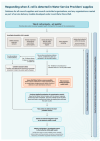
This flowchart summarises key actions and timeframes when responding to an E. coli detection. It’s a helpful summary and should be read alongside the full guidance below.
Flowchart: Responding to E. coli